Level
Level
Course for Level 1 certified teachers.
The place

STUDIO JOMA (formerly Iyengar Yoga Center of Marseille)
19 lace Sebastopol
13004 MARSEILLE
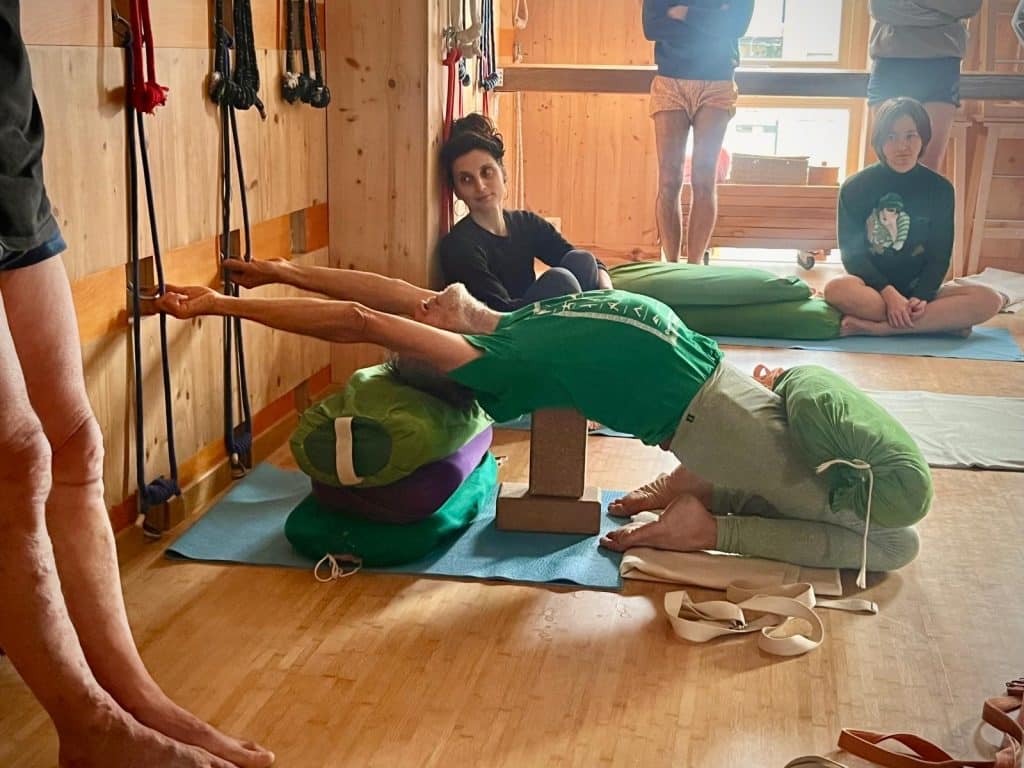
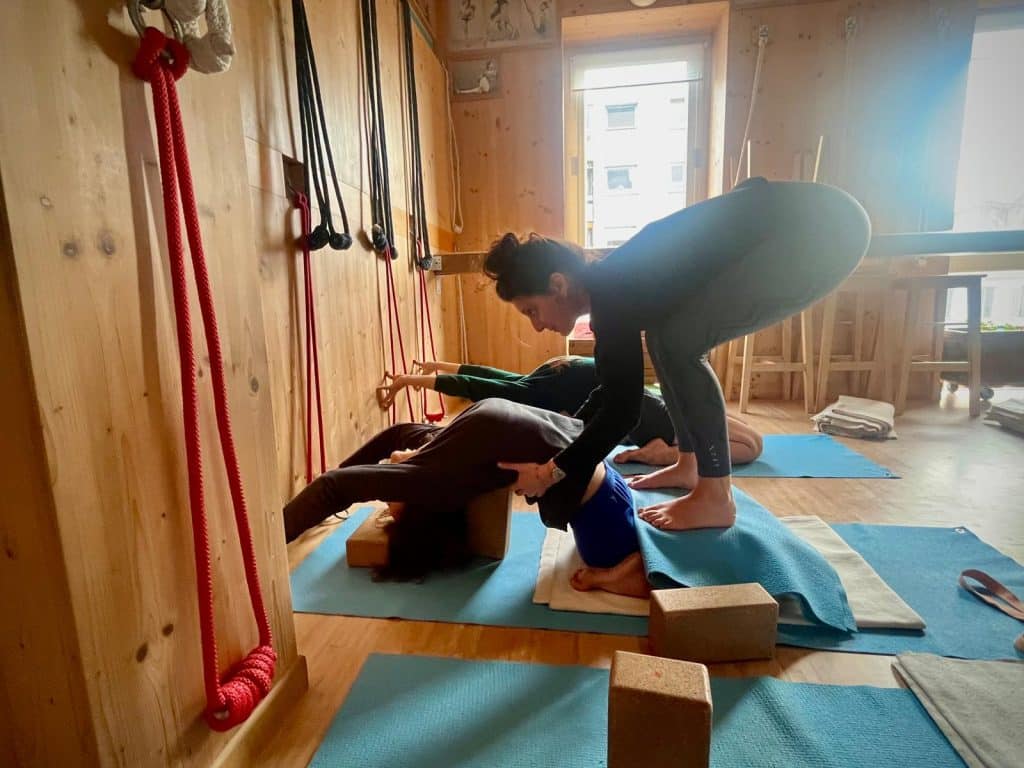
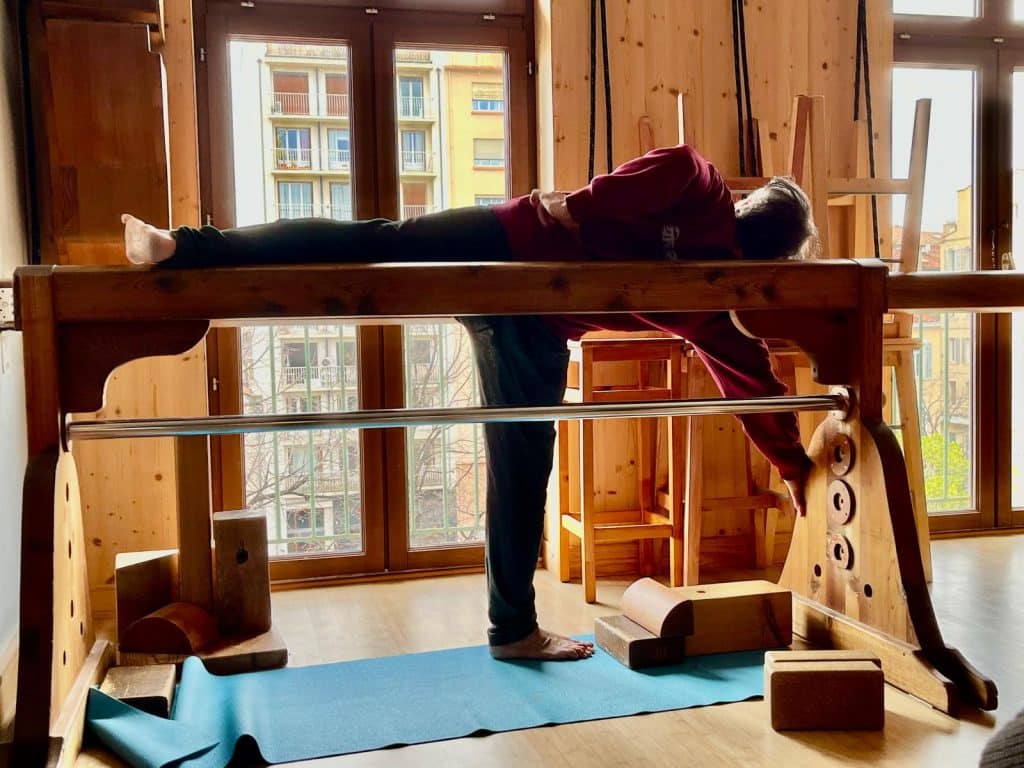
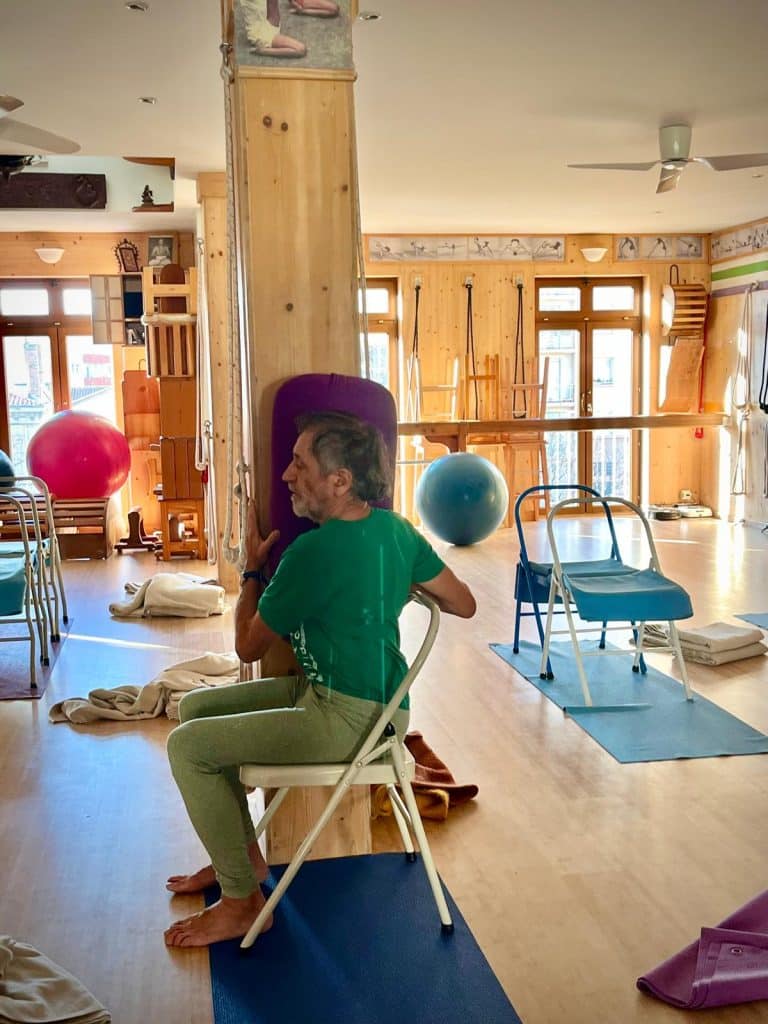
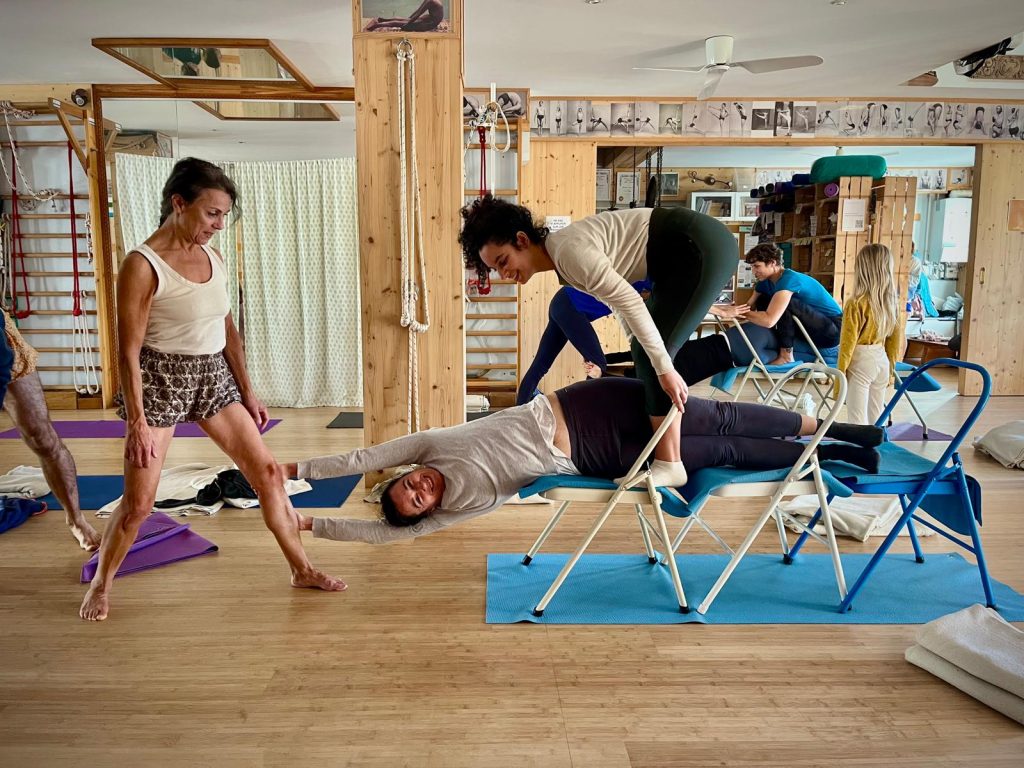
A bright, welcoming and spacious room, equipped with all the necessary supports for practice according to theteachings of B.K.S Iyengar®.
The teacher

Stéphane Lalo has been practicing Iyengar© yoga since 1985 and is a Level 4 (Advanced J-3) certified teacher at the Ramamani Iyengar Institute in Pune, India, where he has been going every year to study with B.K.S. Iyengar and his children since 1989.
He has been teaching yoga in Marseille since 1990 and regularly leads courses in France and abroad.
Opening hours
Friday: 4:30 pm – 8 pm
Saturday: 10 am – 1 pm and 3 pm – 6:30 pm
Sunday: 9 am – 12 pm and 2 pm – 5 pm
Organisation of teaching
Start of the session on Friday, as well as Saturday and Sunday mornings:
– 60 min of practice before the therapy is taught.
– End of the day: 30 min of recovery asanas.
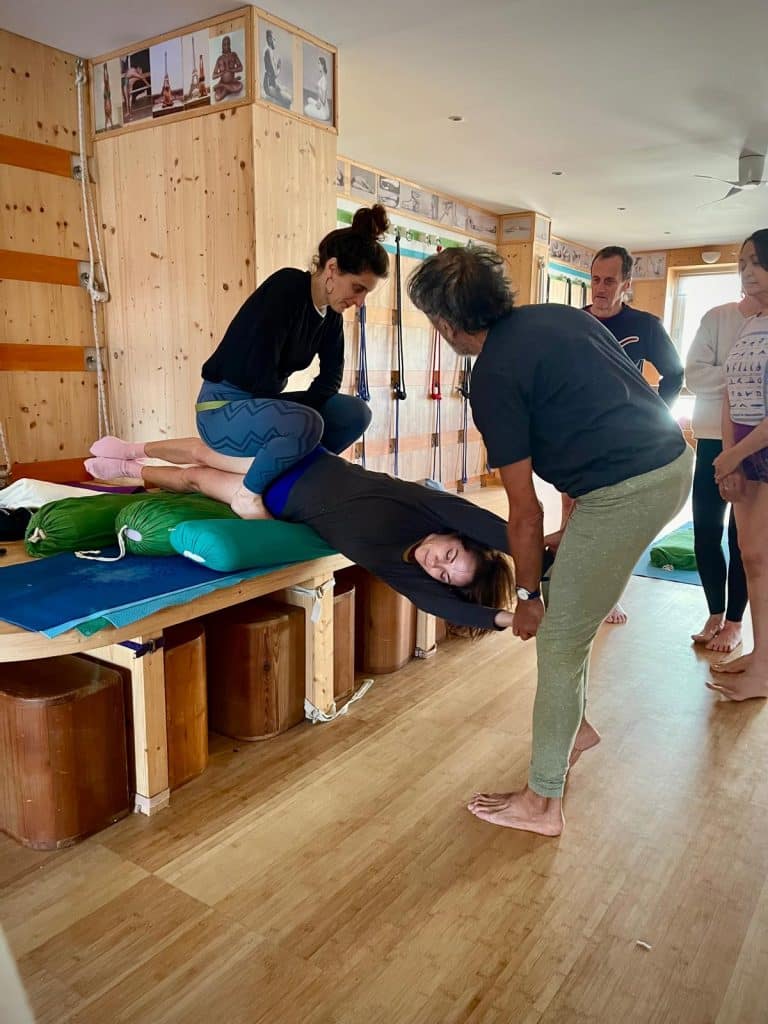
– At defined times during the 3 days, a few people with a specific condition will come as subjects to participate in the course in order to be able to offer them a suitable sequence.
Participation
180€ The full weekend.
If the price is a difficulty for your participation, please contact us.
The number of participants is limited to 24 people.
Registration
To register, please fill in the registration form below.
=> Download the registration form
Send the completed registration form after sending an email
Send a cheque for 100€from Ahrres to the order of the DIPIKA association at the following address:
9 place Sebastopol
13004 MARSEILLE
Content of the course
Content : Therapy Cycle for Teachers
According to the philosophy of Yoga and Samkhya
Pedagogy in 3 types of possible situations:
– a person in a course with specific adjustments;
– one person in general course, with one or more assistants available;
– a person in private lessons.
The therapeutic aspects of the practice will be approached according to the philosophy of Yoga and Samkhya, in relation to the concepts of the Vayus and Koshas.
Physical limitations are perceived primarily as Vrittis, as well as disturbances and imbalances of the Doshas and elements.
1. Karmendryas : feet, knees, hips: displacement, stability, earth element (Prithvi), in
relationship with air and mobility.
2. Karmendryas: hands, arms, shoulders: functions of grasping, expression and relation.
3. The spine in relation to the Karmendryas : protection of the nervous systems and
organic; vertebrae and ribs; from the coccyx to the occiput.
4. The lower vital organs: digestion, absorption, excretion and reproduction, in relation to
with the elements fire (Agni) and water (Ap), as well as with Samana Vayu and Apana Vayu.
5. The higher thoracic vital organs: respiration and circulatory system, in relation to the elements air and fire (Agni); vitality and intention; Prana Vayu.
6. The endocrine system, disturbances of the nervous system and sense organs,
Jnanendryas, in relation to the ether element (Akasha), Udana Vayu and Vyana Vayu.